News!
和漢医薬学総合研究所Suresh Awale准教授らの共同研究成果が、JST公式ニュースポータル「サイエンス・ジャパン」に掲載されました。
EXCLUSIVE INTERVIEW
Chu-Nichi Shimbun has published exclusive interview of Dr. Suresh Awale
Click on the link below to delve into the in-depth conversation with Chu-Nichi Shimbun.
膵臓がんの薬候補 植物から見つける 富山大 スレス・アワレ准教授
Chu-Nichi Shimbun has published exclusive interview of Dr. Suresh Awale
Click on the link below to delve into the in-depth conversation with Chu-Nichi Shimbun.
膵臓がんの薬候補 植物から見つける 富山大 スレス・アワレ准教授
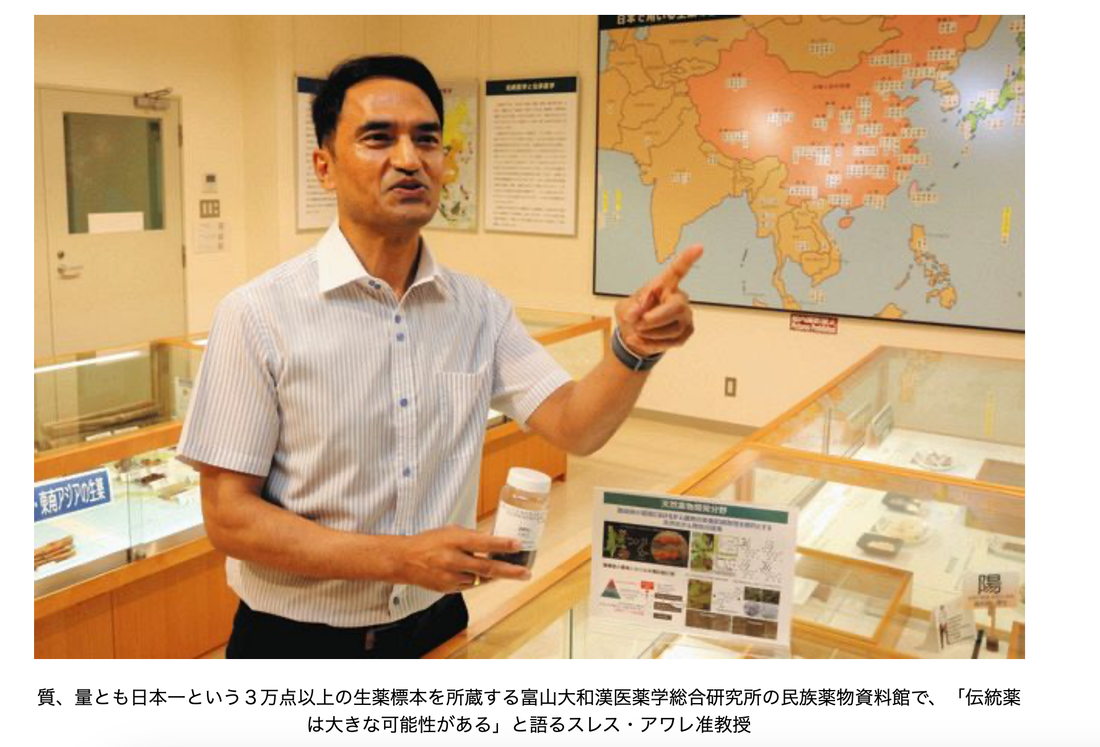
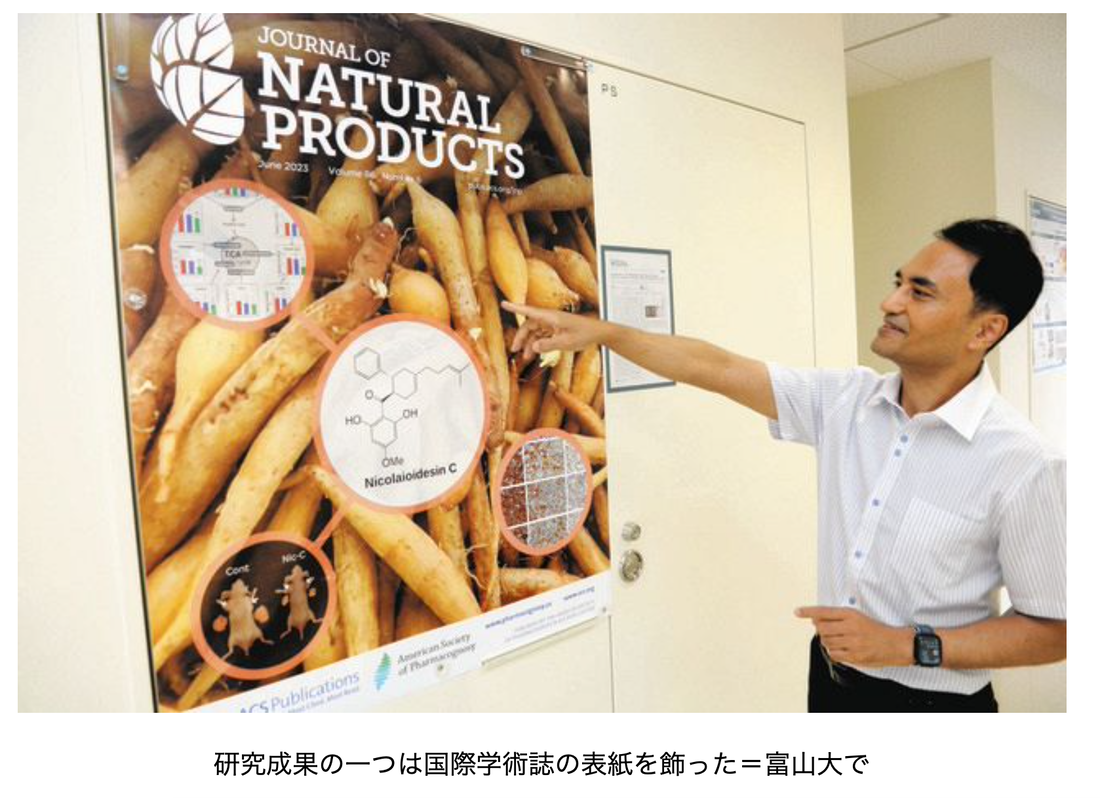

| 2023.7.15_中日新聞_1_2.pdf |
Press Release: Targeting Pancreatic Tumors: Breakthrough Discovery of Nicolaioidesin C as a Promising Antitumor Agent
プレスリリース: がん微小環境をターゲットとした 新規膵がん治療薬の開発
富山テレビ (2023年6月28日) ショウガ科の植物「オオバンガジュツ」に“すい臓がん治療”に効果のある成分…治療薬開発で期待
北日本新聞 膵臓がん治療へ有効 ショウガ科植物から新化合物、富山大アワレ准教授ら作製
富山新聞 すい臓がんにショウガ成分が効果富大和漢研発表腫瘍の成長阻害
プレスリリース: がん微小環境をターゲットとした 新規膵がん治療薬の開発
富山テレビ (2023年6月28日) ショウガ科の植物「オオバンガジュツ」に“すい臓がん治療”に効果のある成分…治療薬開発で期待
北日本新聞 膵臓がん治療へ有効 ショウガ科植物から新化合物、富山大アワレ准教授ら作製
富山新聞 すい臓がんにショウガ成分が効果富大和漢研発表腫瘍の成長阻害
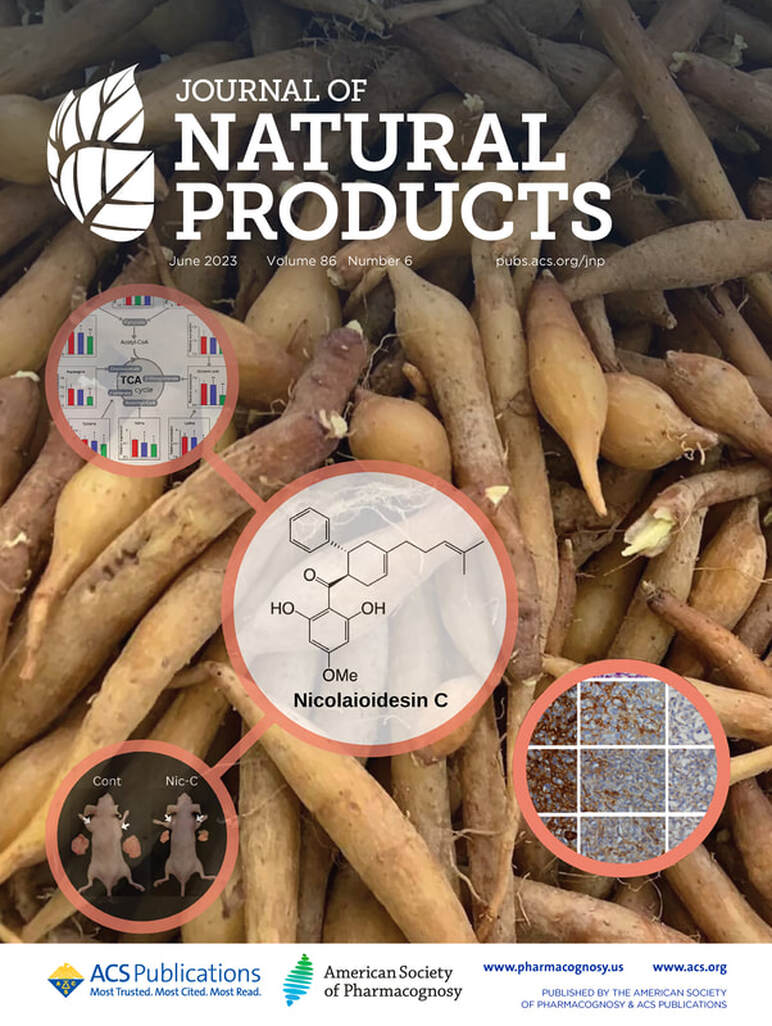
We're thrilled to announce that our groundbreaking research has made it to the cover page of the Journal of Natural Products (June 23, 2023 Volume 86, Issue 6)!
Nicolaioidesin C, a remarkable natural product from Bosenbergia pandurata , holds immense promise as an antitumor agent targeting pancreatic cancer. Read the cover story in Journal of Natural Products.
https://pubs.acs.org/toc/jnprdf/86/6
Nicolaioidesin C, a remarkable natural product from Bosenbergia pandurata , holds immense promise as an antitumor agent targeting pancreatic cancer. Read the cover story in Journal of Natural Products.
https://pubs.acs.org/toc/jnprdf/86/6
Press Release:
University of Toyama and Nagoya University:
Pioneering a Paradigm Shift in Anti-Pancreatic Cancer Drug Development
Toyama, June 5, 2023
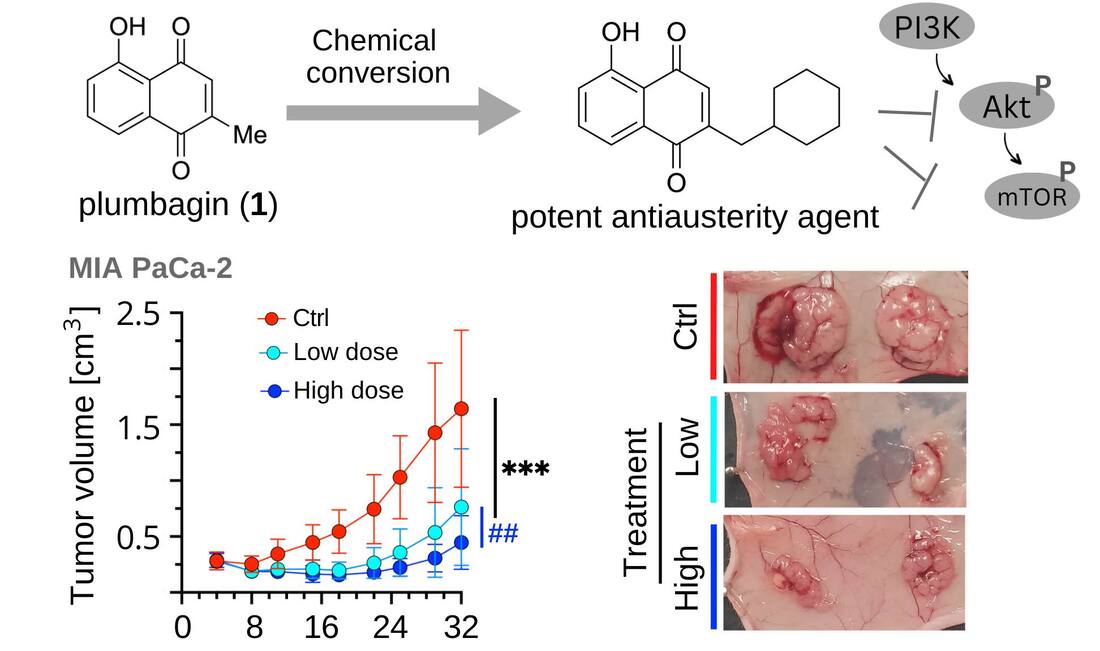
The University of Toyama and Nagoya University proudly announce a groundbreaking milestone in cancer research, marking a significant leap forward in the fight against pancreatic cancer. Through relentless dedication and innovative thinking, these esteemed institutions have successfully developed a novel therapeutic candidate with a distinct mechanism of action, poised to revolutionize the field of oncology.
[Link to Press Release by University of Toyama: https://www.u-toyama.ac.jp/wp/wp-content/uploads/20230605_1.pdf]
[Link to Press Release by Nagoya University: https://www.med.nagoya-u.ac.jp/.../res.../pdf/Jou_230605.pdf ]
The University of Toyama and Nagoya University extend their invitation to scientists, healthcare professionals, industry leaders, and the public to join them on this transformative journey. Together, we have the opportunity to redefine the future of pancreatic cancer treatment, paving the way for innovative therapeutic interventions and offering renewed hope to those affected by this devastating disease.
Pioneering a Paradigm Shift in Anti-Pancreatic Cancer Drug Development
Toyama, June 5, 2023
The University of Toyama and Nagoya University proudly announce a groundbreaking milestone in cancer research, marking a significant leap forward in the fight against pancreatic cancer. Through relentless dedication and innovative thinking, these esteemed institutions have successfully developed a novel therapeutic candidate with a distinct mechanism of action, poised to revolutionize the field of oncology.
[Link to Press Release by University of Toyama: https://www.u-toyama.ac.jp/wp/wp-content/uploads/20230605_1.pdf]
[Link to Press Release by Nagoya University: https://www.med.nagoya-u.ac.jp/.../res.../pdf/Jou_230605.pdf ]
The University of Toyama and Nagoya University extend their invitation to scientists, healthcare professionals, industry leaders, and the public to join them on this transformative journey. Together, we have the opportunity to redefine the future of pancreatic cancer treatment, paving the way for innovative therapeutic interventions and offering renewed hope to those affected by this devastating disease.
富山大学と名古屋大学:膵臓がん治療薬の開発におけるパラダイムシフトの先駆者
富山大学と名古屋大学は、がん研究における画期的なマイルストーンを誇りに思い、膵臓がんとの戦いにおいて大きな前進を遂げました。これらの名門機関は、執念と革新的な思考により、新しい治療候補薬を独自の作用機序で開発し、腫瘍学の分野を根本的に変えることができる地位に立ちました。
[富山大学のプレスリリースへのリンク:https://www.u-toyama.ac.jp/wp/wp-content/uploads/20230605_1.pdf]
[名古屋大学のプレスリリースへのリンク:https://www.med.nagoya-u.ac.jp/.../res.../pdf/Jou_230605.pdf]
富山大学と名古屋大学は、がん研究における画期的なマイルストーンを誇りに思い、膵臓がんとの戦いにおいて大きな前進を遂げました。これらの名門機関は、執念と革新的な思考により、新しい治療候補薬を独自の作用機序で開発し、腫瘍学の分野を根本的に変えることができる地位に立ちました。
[富山大学のプレスリリースへのリンク:https://www.u-toyama.ac.jp/wp/wp-content/uploads/20230605_1.pdf]
[名古屋大学のプレスリリースへのリンク:https://www.med.nagoya-u.ac.jp/.../res.../pdf/Jou_230605.pdf]
Media coverage
University of Toyama News Link: Breakthrough Creation of Novel Compound with Unique Mechanism of Action for Anti-Pancreatic Cancer Drug Development
QLifePro News Link: 新たな膵臓がん治療薬候補を創製、既存の抗がん剤とは異なる作用機序-富山大ほか
Toyama Shimbun News: すい臓がん治療に期待新たな化合物を合成富大の研究グループ
Kitanipoon Shimbun News: 膵臓がん治療へ新化合物 富山・名古屋大の研究グループ作製
日本の研究: 既存の抗がん剤とは異なる作用機序に基づく新たな膵臓がん治療薬候補化合物の創製に成功
JST 客観日本 : 富山大学等成功开发出胰腺癌治疗药物的候选化合物,作用机理不同于现有药物
QLifePro News Link: 新たな膵臓がん治療薬候補を創製、既存の抗がん剤とは異なる作用機序-富山大ほか
Toyama Shimbun News: すい臓がん治療に期待新たな化合物を合成富大の研究グループ
Kitanipoon Shimbun News: 膵臓がん治療へ新化合物 富山・名古屋大の研究グループ作製
日本の研究: 既存の抗がん剤とは異なる作用機序に基づく新たな膵臓がん治療薬候補化合物の創製に成功
JST 客観日本 : 富山大学等成功开发出胰腺癌治疗药物的候选化合物,作用机理不同于现有药物
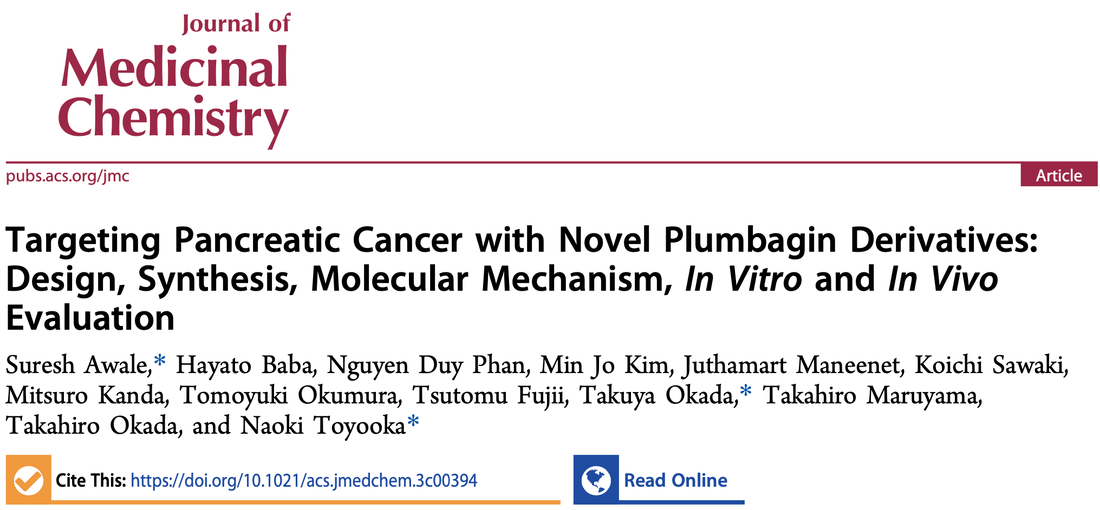
Our latest Publication
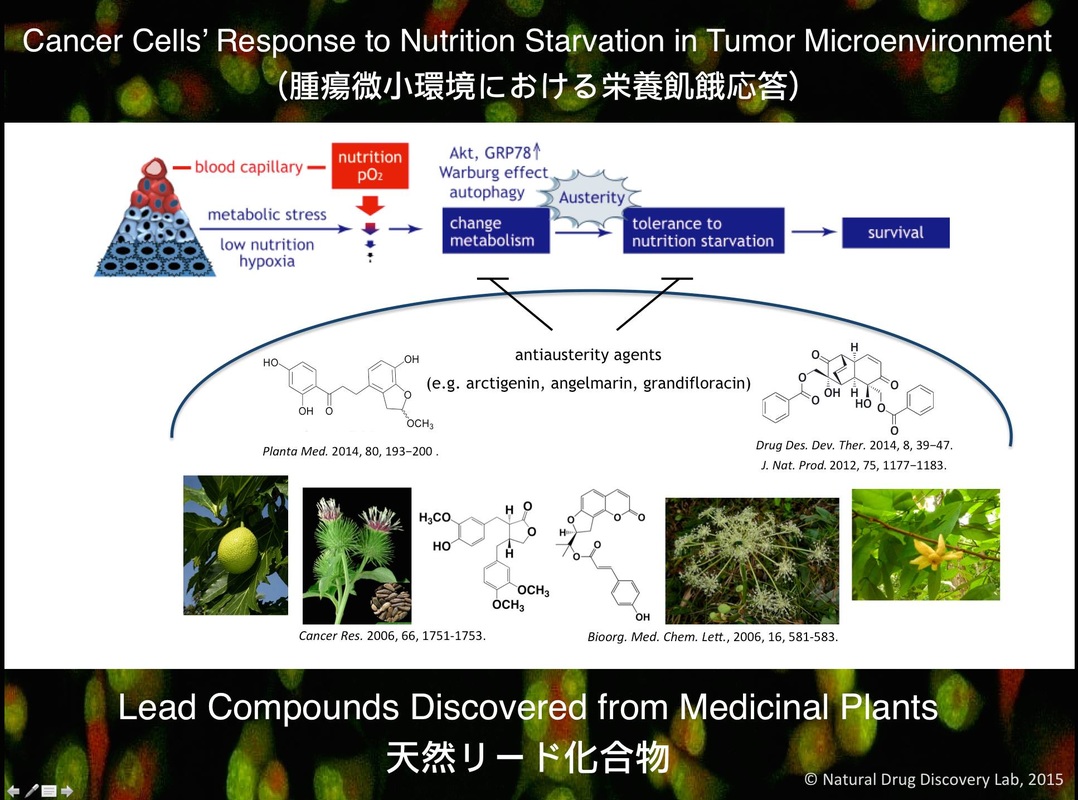
Natural Drug Discovery LabThe major research focus of our division is to discover natural anticancer agents by targeting cancer cells’ characteristic performance (e.g. tolerance to nutrient starvation) in the tumor microenvironment. Tumor cells in general proliferate very fast in an unregulated manner and are often exposed to nutrition and oxygen deficient environment due to poor and disorganized vasculature. In particular, cells of the clinically hypo-vascular tumors such as pancreatic cancers have inherent ability to tolerate the extreme environments of low nutrition and oxygen by modulating their energy metabolism (austerity). Therefore, to discover natural anticancer agents that retard this tolerance to nutrition starvation is one of the major research goals of our division. In order to achieve this goal, we are actively engaging in the following research projects.
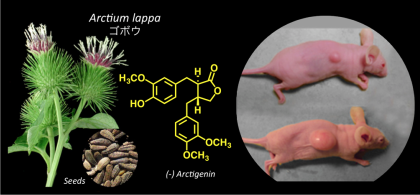
Arctigenin, an anti-cancer agent discovered through anti-austerity strategy showed potent anticancer activity against a number of human pancreatic xenograft tumor models.
Most importantly, arctigenin had recently completed Phase II human clinical trial against gemcitabine-refractory advanced pancreatic cancer patients. It showed a high safety profile and significant survival benefit among the pancreatic cancer patients. |
天然薬物開発研究室 我々 の分野では、研究の主な焦点として、腫瘍微小環境におけるがん細胞の栄養飢餓耐性を標的とする天然抗がん物質を探索している。がん細胞は一般的に無秩序か つ急速に増殖し、多くの場合、脆弱で無秩序に腫瘍血管が形成されるため栄養や酸素の欠如した環境に曝されることになる。特に、膵臓がんのような乏血性腫瘍 においては、がん細胞はエネルギー代謝を調節することで低栄養・低酸素といった厳しい環境に対する耐性(austerity)を獲得している。従って、この栄養飢餓に対する耐性を解除する天然抗がん化合物の探索は、我々の重要な研究目標の1つである。この研究目標を達成するため、我々の分野では以下の研究課題に積極的に取り組んでいる。
|
My outlook and intentions are holistic, in that I believe disciplines have much to offer each other: I am passionate about bridging the traditional medical knowledge within chemistry and biology; I remain convinced that assiduous effort with guarded optimism will yield practical, important outcomes. My mantra is “to search for possibilities where there seem to be but impossibilities” and to advance Traditional Natural Medicine research and its attendant drug discoveries in contributing to improved health in our global society.
Suresh Awale

|

|

|
Copyright © 2023, Natural Drug Discovery Lab, All Rights Reserved

|
|
